ABout Ameelio
Ameelio is a technology nonprofit pushing for a more humane and rehabilitative corrections system by helping connect incarcerated people to their support networks. This kind of access plays a crucial role in lowering recidivism rates.
Project Background
After launching Ameelio Mail, a platform that helped families send letters to incarcerated loved ones, we set out to build Ameelio Connect — a mobile and web app for messaging, voice, and video calls — aiming to mirror how families stay in touch in the free world. Navigating strict Department of Corrections (DOC) regulations, I led user research and design efforts to make the experience feel more human and less punitive. I collaborated closely with engineers and our Principal Product Designer to create an interface that was both accessible for users with low digital literacy and modern enough to ease the transition to everyday digital communication. These are a few of the features and design principles I'm proud of.
FEATURE: Quick replies for missed calls
Problem
Calls from prison are one-way, which means only the incarcerated person can initiate them. But families juggling work, caregiving, and household responsibilities often miss these calls. Due to some DOCs mandating message delays for security review, not all families can respond in time to coordinate a callback. This means real-world connection becomes nearly impossible in those fleeting moments, with no way of knowing if, or when, the next chance will come.
Solution
Calls from prison are one-way, which means only the incarcerated person can initiate them. But families juggling work, caregiving, and household responsibilities often miss these calls. Due to some DOCs mandating message delays for security review, not all families can respond in time to coordinate a callback. This means real-world connection becomes nearly impossible in those fleeting moments, with no way of knowing if, or when, the next chance will come.

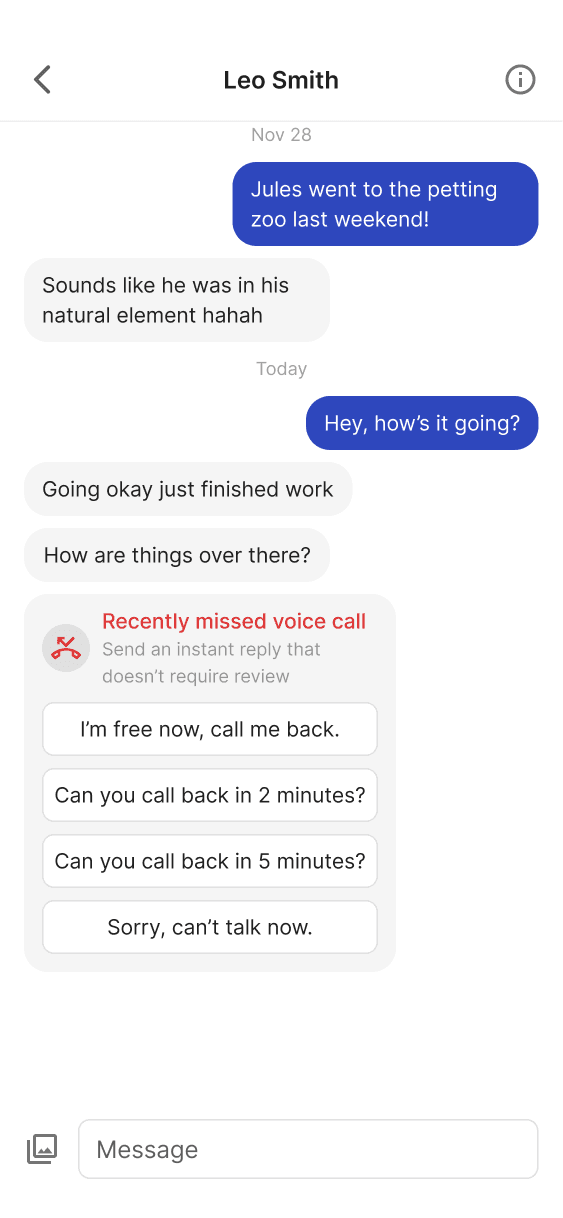
quick reply flow
PRINCIPLE: REBUILD trust with transparency
Problem
In the digital prison communication space, for-profit platforms have historically prioritized Department needs over the user experience for incarcerated people. In practice that means incarcerated people and their families are often left in the dark about whether a message was delivered or why a call dropped. This lack of transparency adds emotional strain to an already fragile lifeline, turning treasured opportunities for connection into another source of worry.
Solution
I designed and tested clear message statuses, call timer alerts, and respectful language to help people better understand the system and focus on what matters most: staying connected.


message statuses, call time alerts, and call failure modal
Principle: Reduce perceived surveillance
Problem
A key challenge given DOC constraints was maintaining Ameelio’s reputation as a trusted, good-faith platform. Our user base is naturally skeptical of both hyper-vigilant prison systems and profit-driven third-party services, requiring us to continuously emphasize that Ameelio is for people, not for profit.
Solution
After identifying key moments in the UX where communication monitoring occurs, I designed unobtrusive cues to indicate that oversight is conducted by Departments of Corrections — not Ameelio. This transparency, paired with a clean and modern interface, helped reduce perceived surveillance from Ameelio.


DOCs can reject photos sent as well as monitor voice calls and video chat messages
Impact
Ameelio Connect has become a core communication tool for families navigating incarceration, supporting over 150,000 users across Colorado, Iowa, Maine, Massachusetts, and even Pakistan. Since launch, the platform has facilitated more than 3 million minutes of free calls and video chats, along with hundreds of thousands of messages and visit requests. By eliminating per-minute fees, Ameelio has saved families an estimated $2.5 million in communication costs to date.
Curious to learn more about this or other projects? You can reach me at elizabethogray@gmail.com :)
